

Dyeing Poison Dart Frog Dendrobates tinctorius

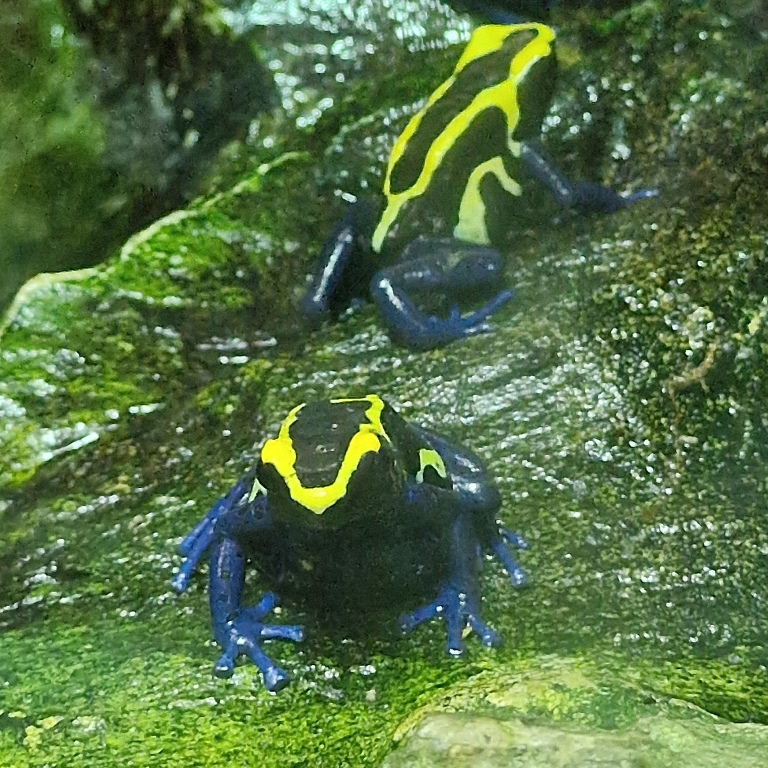

The Dyeing Poison Dart Frog, although small, is one of the largest of the colourful and highly toxic species
of poison dart frogs in South and Central America.


Toxicity comes from its wild diet of invertebrates. The "poison dart" name comes from its use
to poison tips of blow darts by native tribes. The "dyeing" from use of the poisons to dye bird feathers.


Native to the Guianas, Surinam and part of Brazil, it is also the most variable, with a typical colour of blue legs,
black-spotted yellow body and golden head ("Brazil Yellowhead" above), but variations (mainly regional) include just yellow and black,
almost all black with little yellow and some with more blue on the body (like the Peacock below).
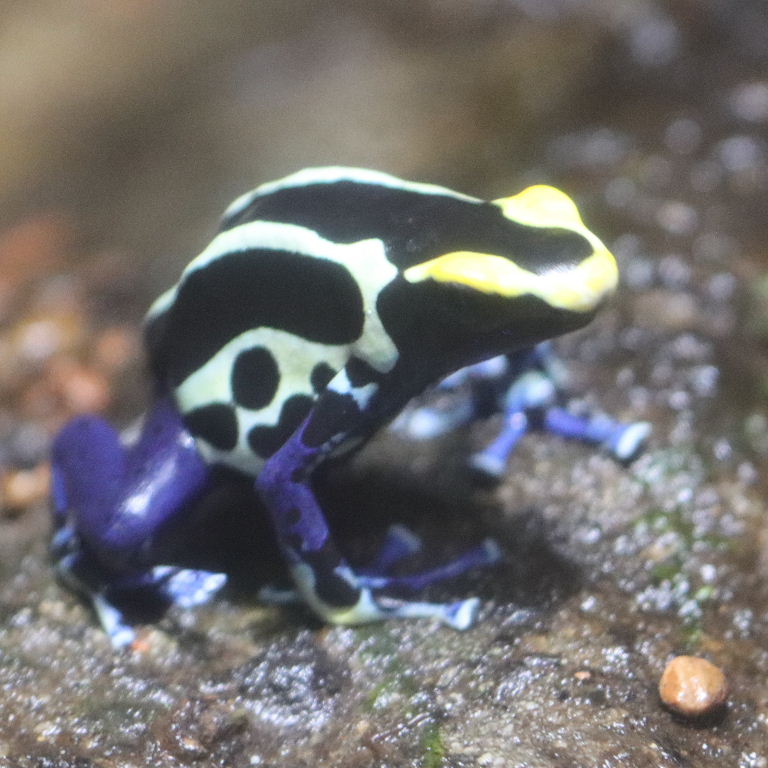


There are different morphs and subspecies. Some authorities include the Blue Poison Dart Frog
(Blue Dyeing Poison Frog) as a subspecies and some as a separate species - see link below.


Limbs are a key variable. This one is called the "Grey-legged" and also the "Powder Blue", having blue-grey limbs with black spots.


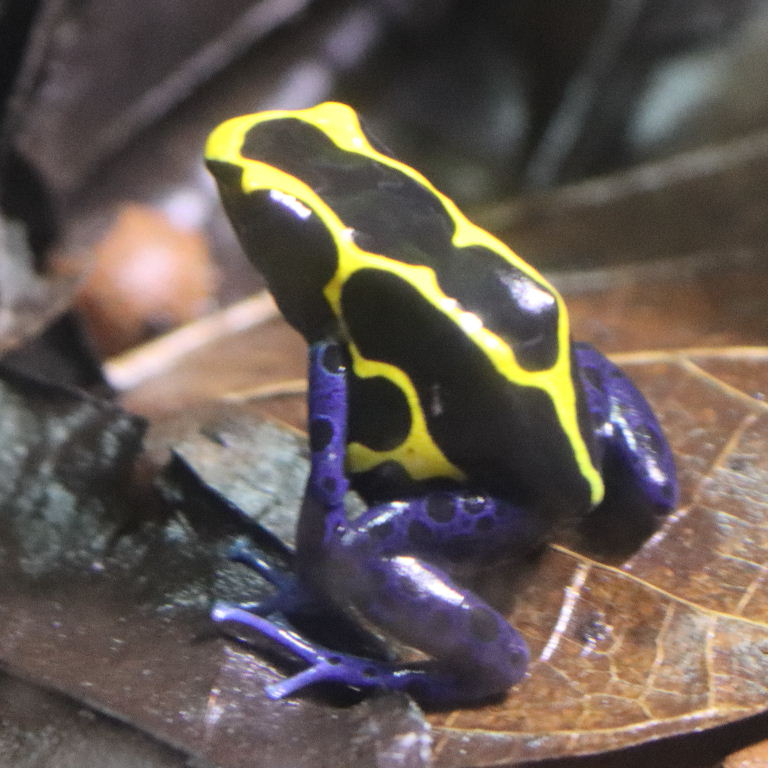
The "Alanis" subspecies (D. t. alanis) is primarily black with yellow
markings on head and back. Limbs can have some yellow with black-spotted blue or blue-grey on black legs, as above left, or
black-spotted blue hind legs, as above centre, or all four black-spotted blue limbs, above right.
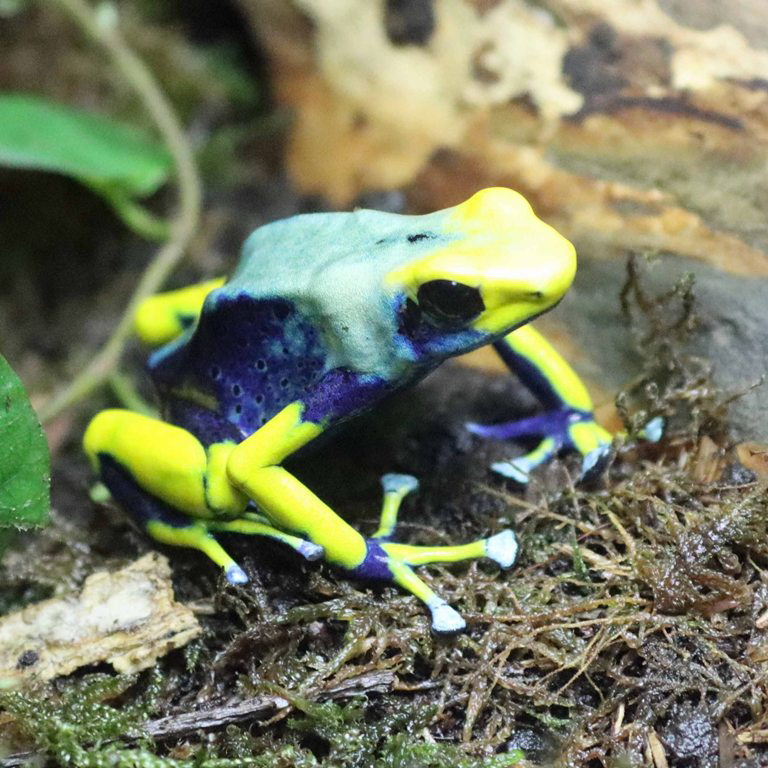
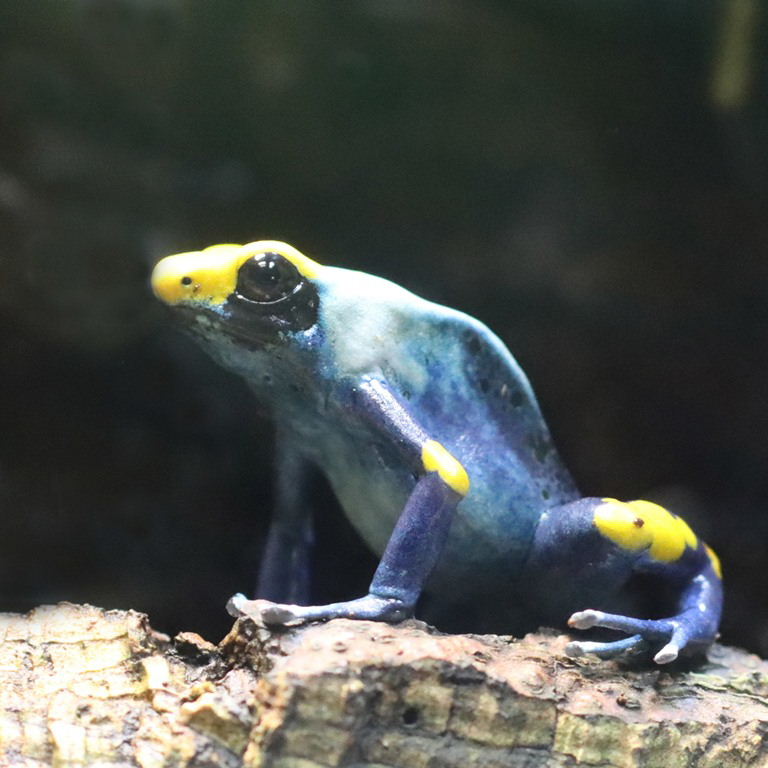
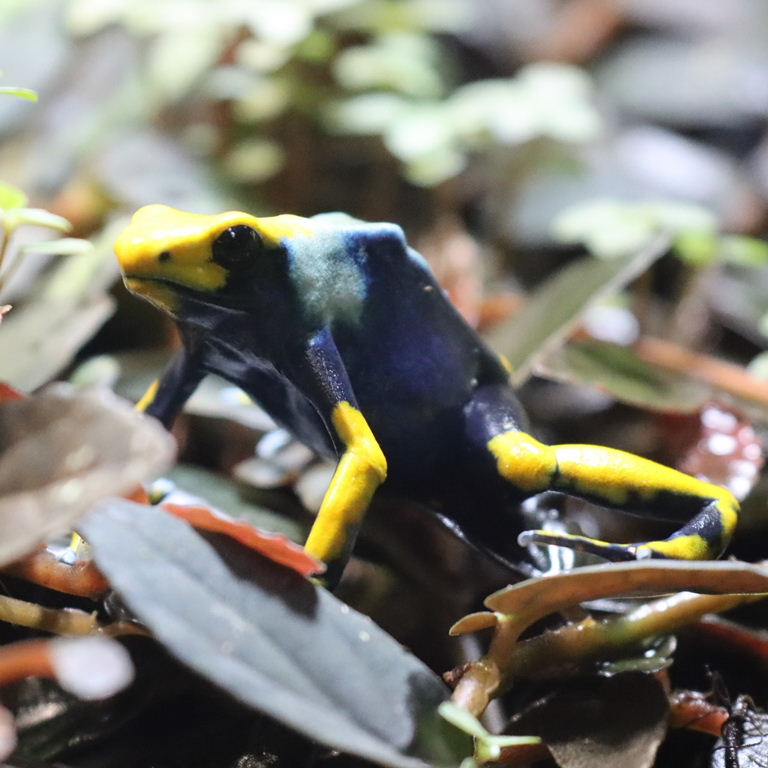
The "Tumucumaque" subspecies, (D. t. tumucumaque), above,
also called Peacock, is one of the prettiest and rarest. It was discovered in Brazilian jungle in only 2004.


One of the variations (morphs) is the "Matecho", above, from the Saül region of French Guiana - bright yellow
with varying amounts of black spots and patches.


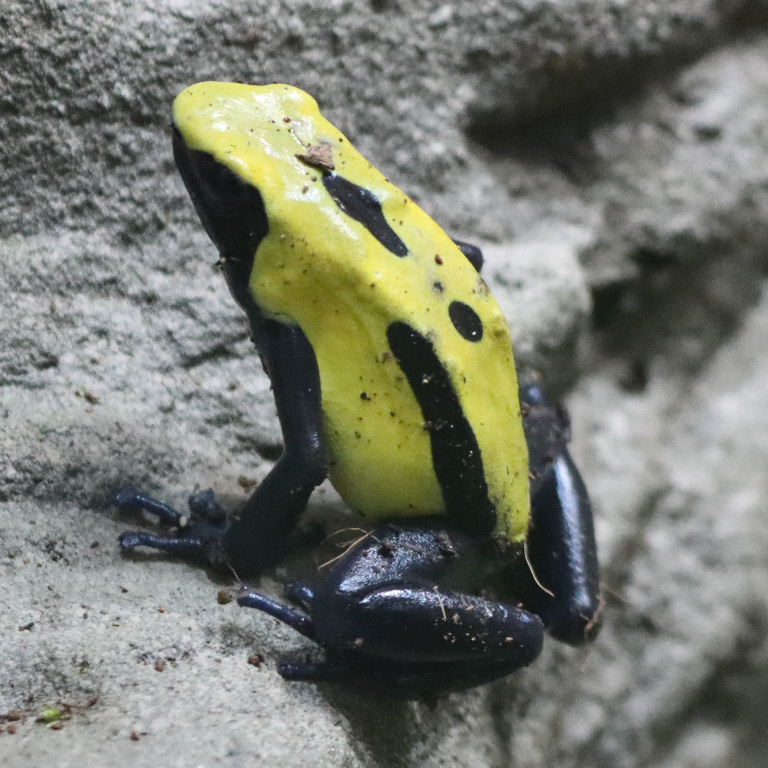
Another, "Citronella", above, is similar but with fully black or dark blue limbs.
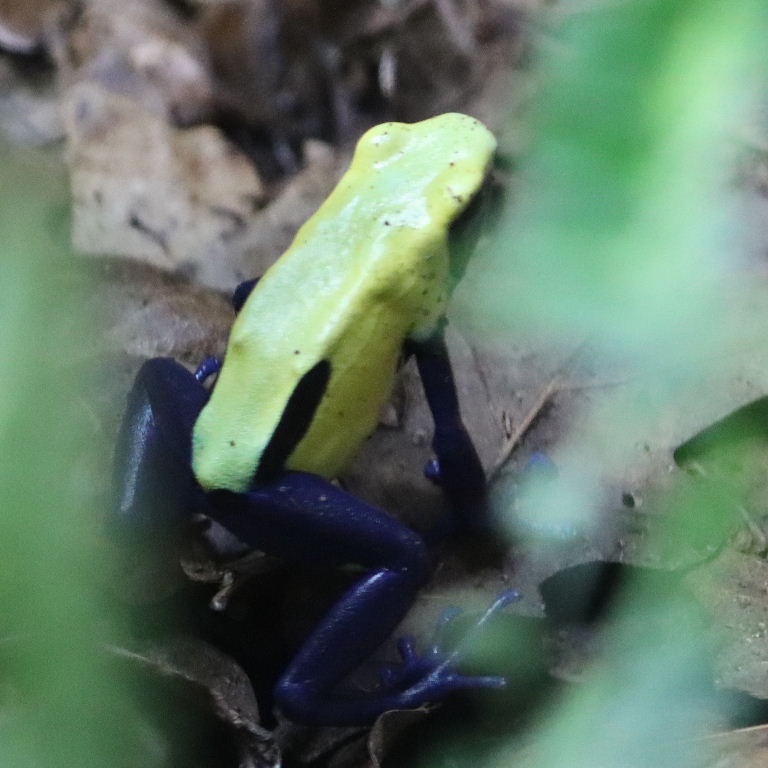
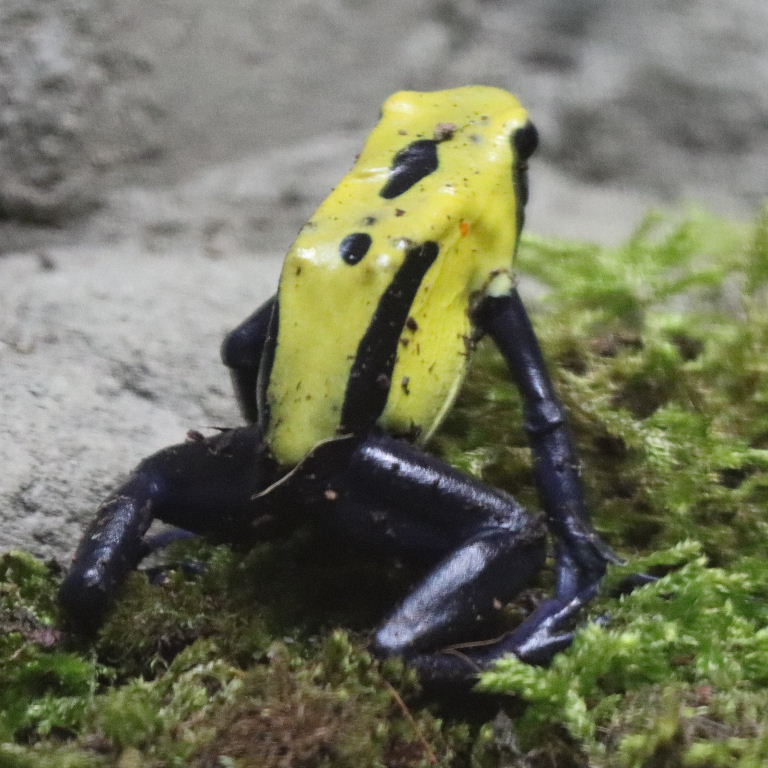
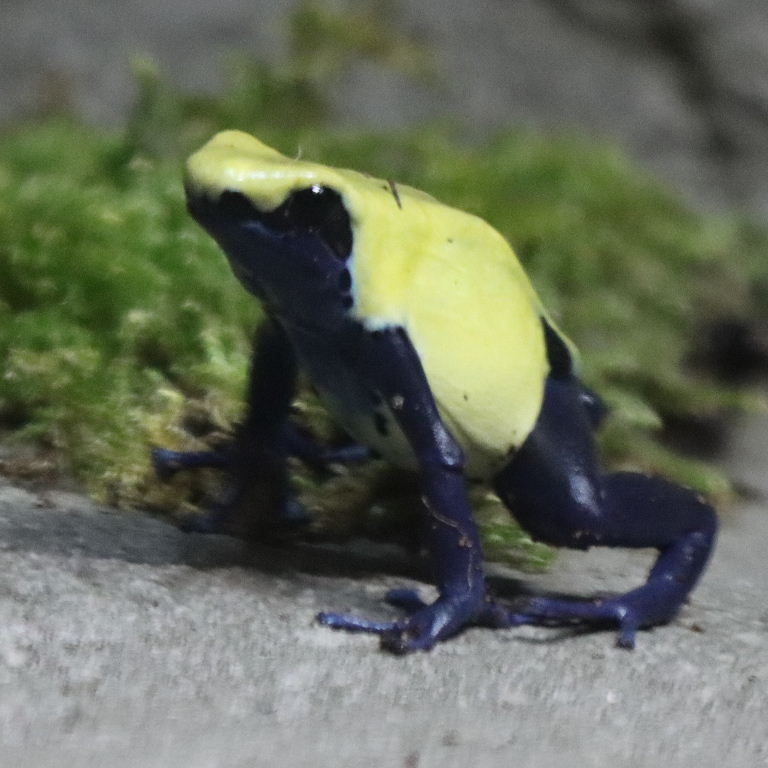
"Citronella" is from the Kasikasima region of Suriname.


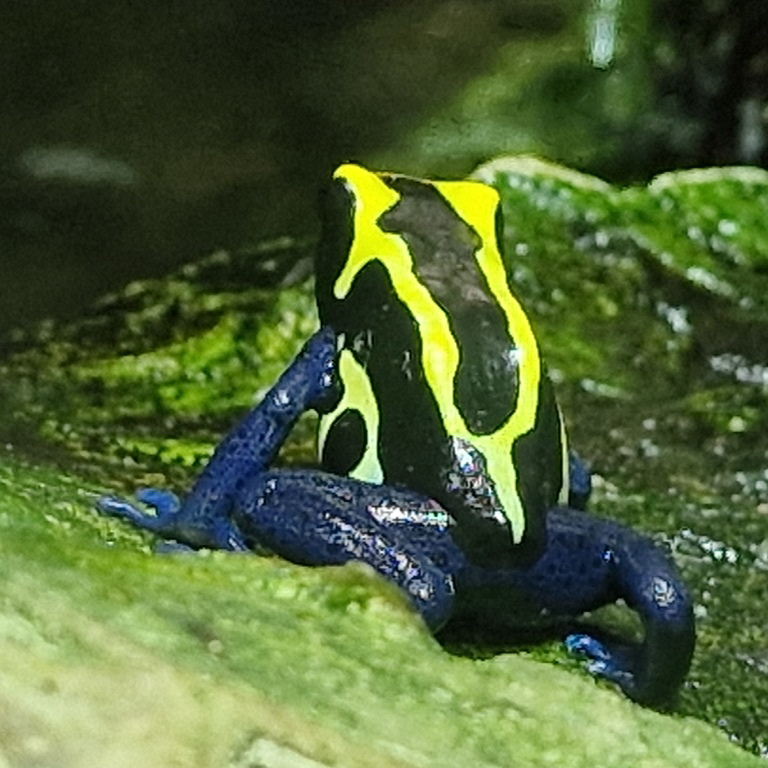
Lengths of various subspecies and forms range from some 3-6 cm.


Habitat loss, mainly by destruction and removal of rainforest, threatens their future in the wild.
Links:
 Blue Dyeing Poison Frog