

Northern Snake-necked Terrapin/Turtle Chelodina rugosa/siebenrocki
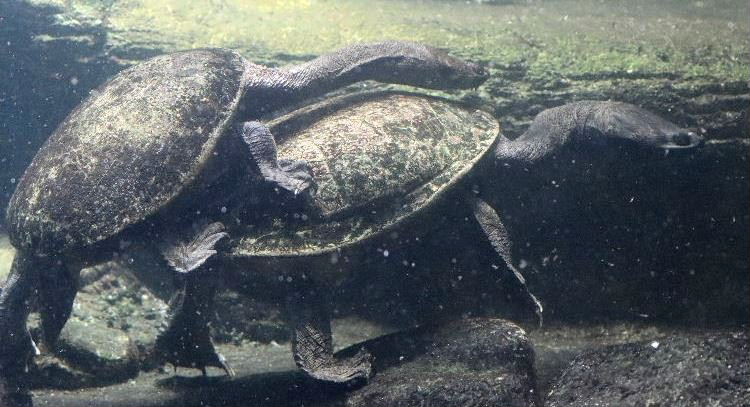

The Northern Snake-necked Terrapin or Long-necked Turtle, is one of several "snake-necked" terrapin species all native
to Australia-Pacific.
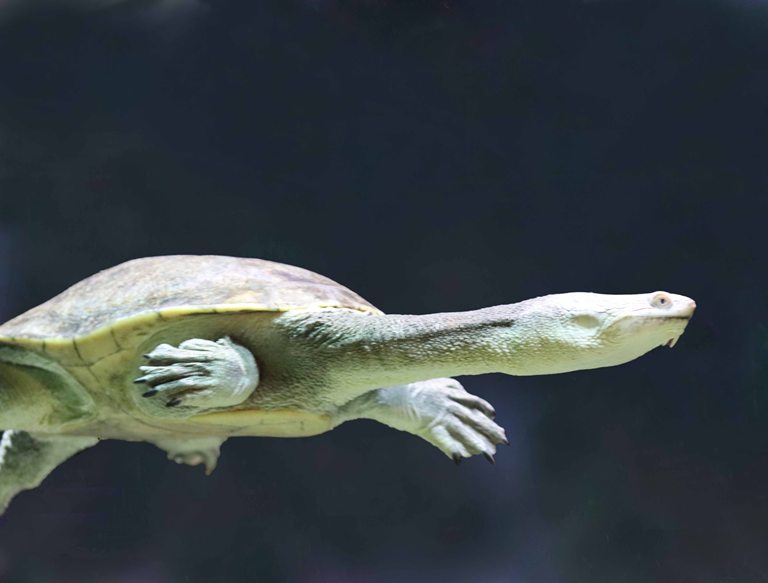
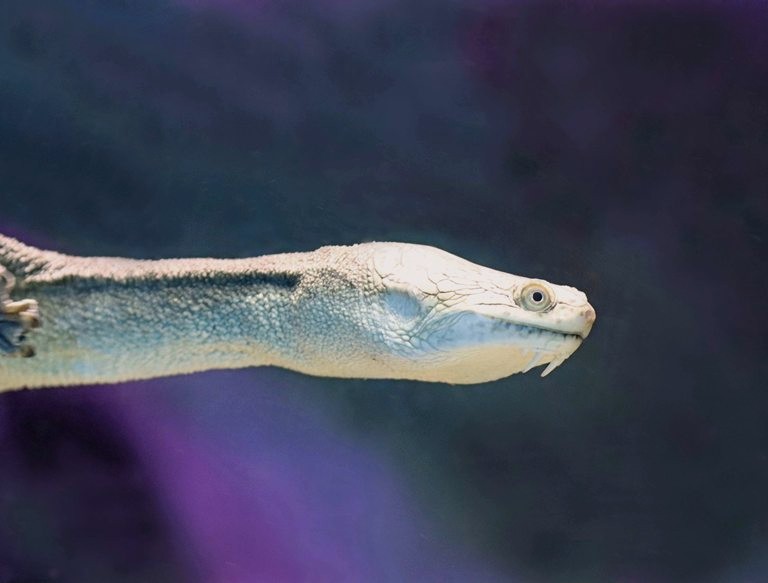
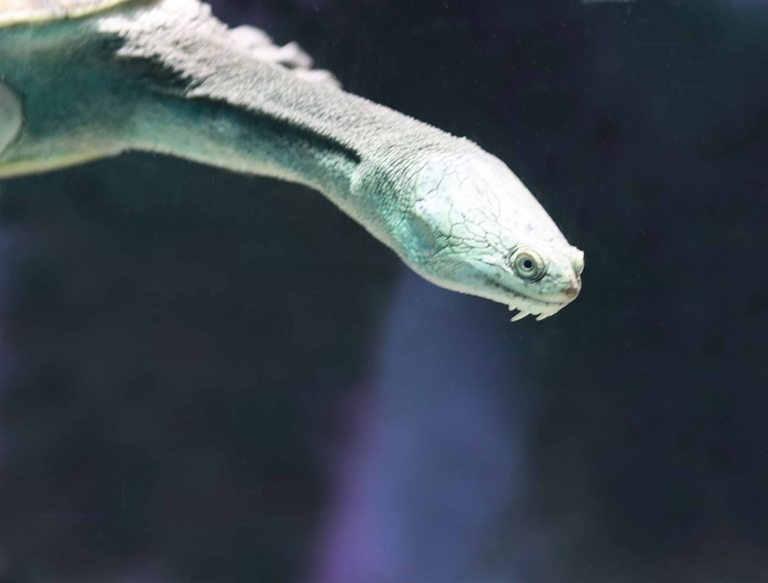
All are carnivorous, eating fish, molluscs and other invertebrates. The neck, when extended, can reach nearly as long as
the body (30cm). When withdrawn, it is withdrawn sideways into the shell.
The Northern Snake-necked is native to northern Australia and southern New Guinea. (There is another species in northern New Guinea.)
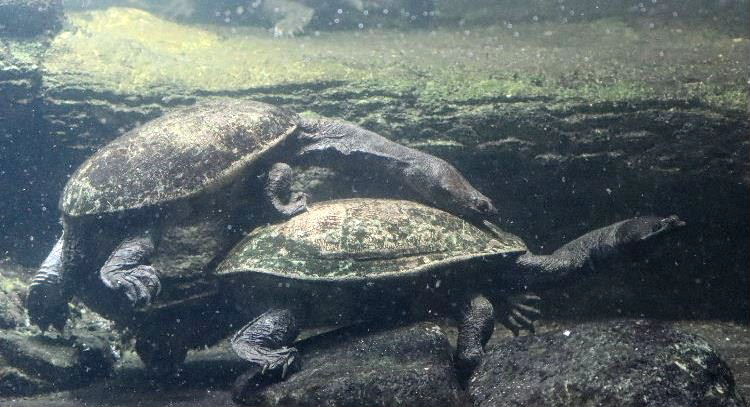
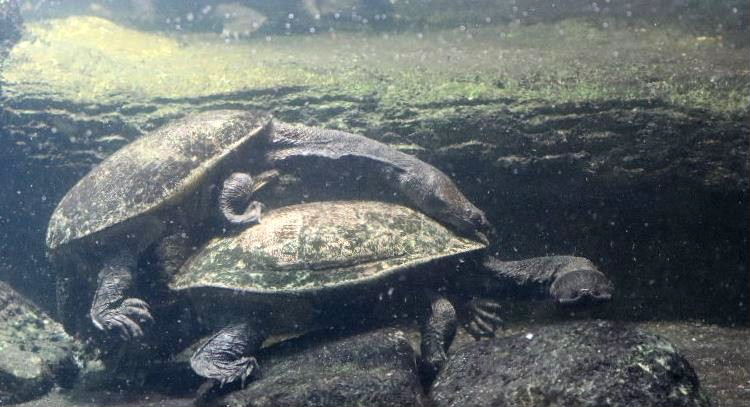
Although a freshwater terrapin, it can be found in coastal brakish waters.
Those shown immediately above are the New Guinea subspecies, C. r. siebenrocki,
sometimes treated as full species C. siebenrocki and sometimes denied even subspecies status.

A taxonomic note from the Government of Western Australia explains: "For many years there has been confusion surrounding
Chelodina oblonga and the northern snake-necked turtle (Chelodina rugosa) since the two species were first recognised as separate species.
In 1889 the two species were mistakenly considered as one widespread species and this concept was followed until 1967 when they were confirmed as two
distinct species as originally suggested, with the south-western snake-necked turtle being C. oblonga. However, in 2013 this was incorrectly changed,
giving the C. oblonga name to the northern snake-necked turtle, with the south-western snake-necked turtle being called C. colliei.
Recent genetic testing has confirmed that the holotype of C. oblonga is in fact the south-western snake-necked turtle, but to avoid further confusion
between the two species the International Commission on Zoological Nomenclature ruled that the south-western snake-necked turtle continue to be C. colliei
and the northern snake-neck to be C. rugosa, with C. oblonga rendered obsolete. However, a recent research article published in Zootaxa (Shea et al, 2020)
reviewed the historical data and casts doubt on the northern Australian origins of specimens identified as C. oblonga. It proposes returning the name
C. oblonga to the populations in south-west Western Australia, in accordance with the genetic evidence for the distribution of the species".
Links:
 Eastern Snake-necked Terrapin
 Roti Island Snake-necked Terrapin