

Tortrix Moths Mimicking Bird Droppings
 Above is one of the several Tortrix moths which imitate the look of a bird dropping to deter predators.
Identified as Gypsonoma sociana by the black lozenge on its lower back.
Above is one of the several Tortrix moths which imitate the look of a bird dropping to deter predators.
Identified as Gypsonoma sociana by the black lozenge on its lower back. Wingspan 12-15mm; UK flight time Jun-Aug.
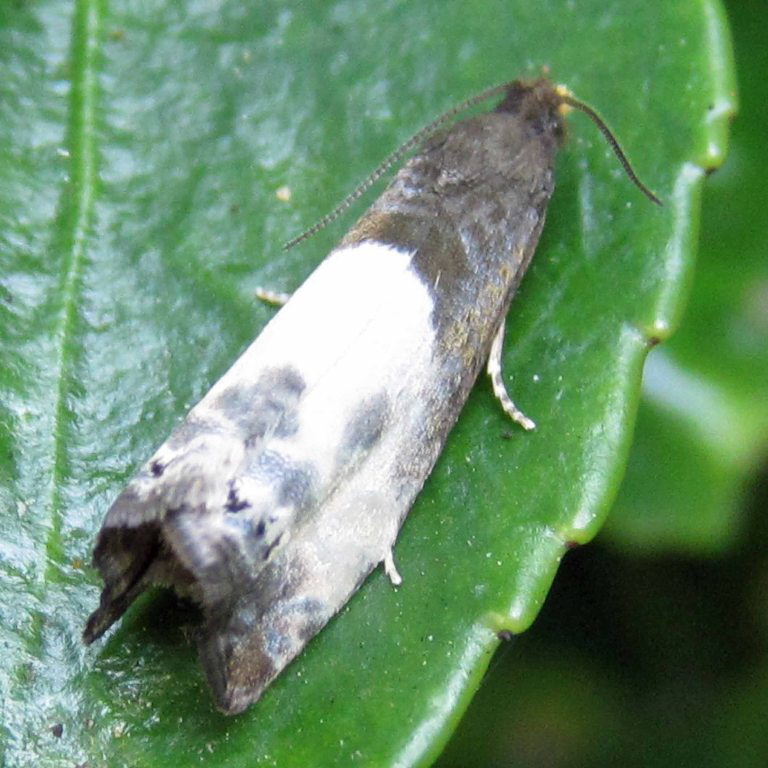
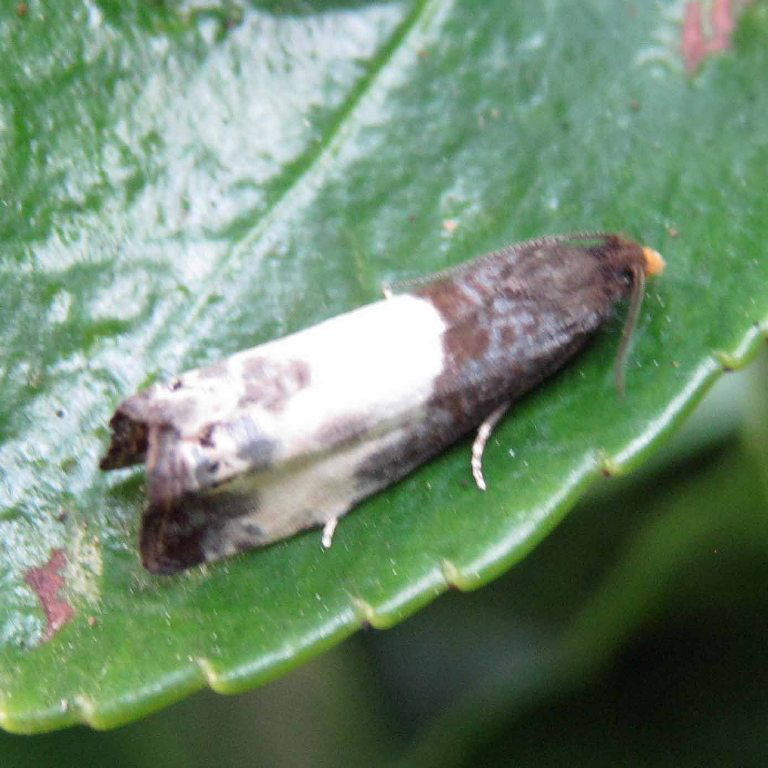
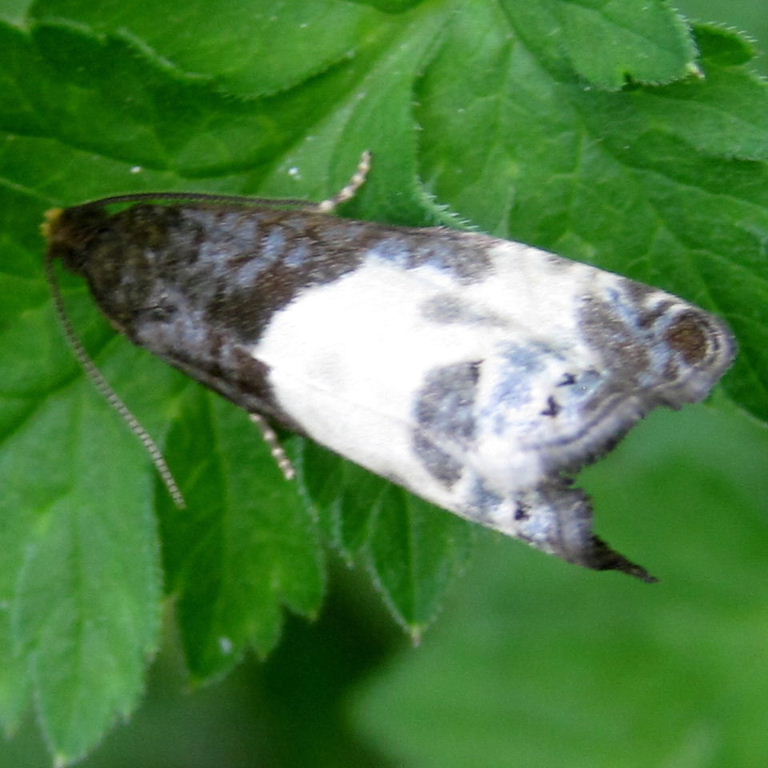
Above is the Black Cloak, also called Yellow-faced Bell, Notocelia (prev. Epiblema) cynosbatella,
the orange snout being the key distinguishing feature. It also disguises itself as a bird dropping and has a dark (greyish) lozenge
on its back; the marbled mantle is concave. Photos taken in early May. Wingspan 16-22mm; UK flight time May-Jul.
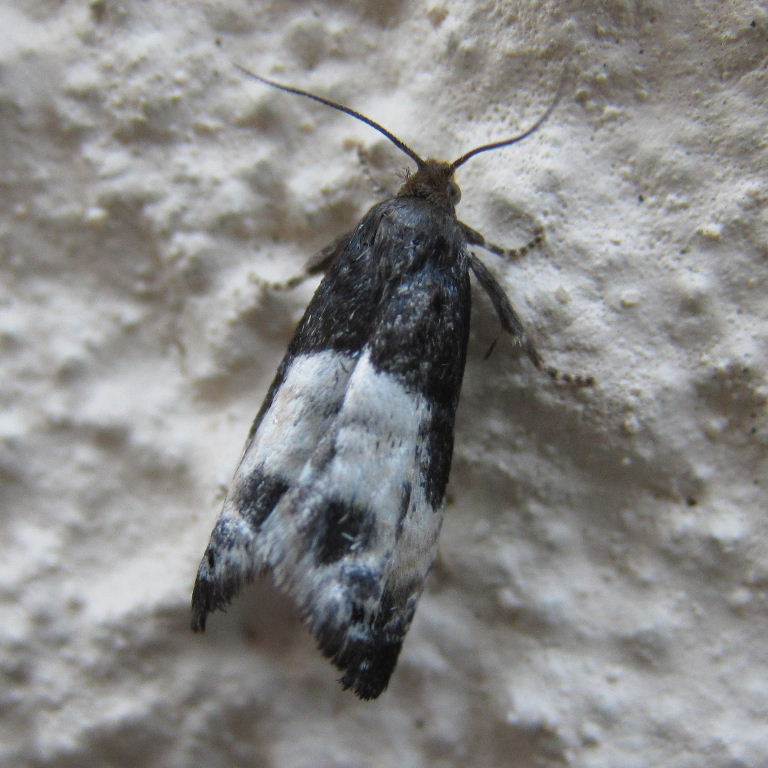
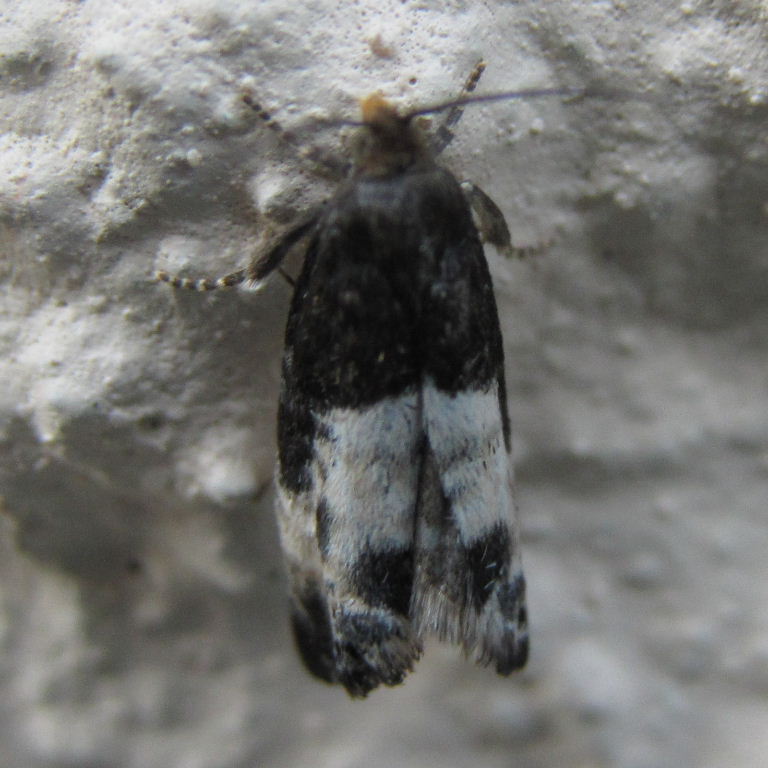
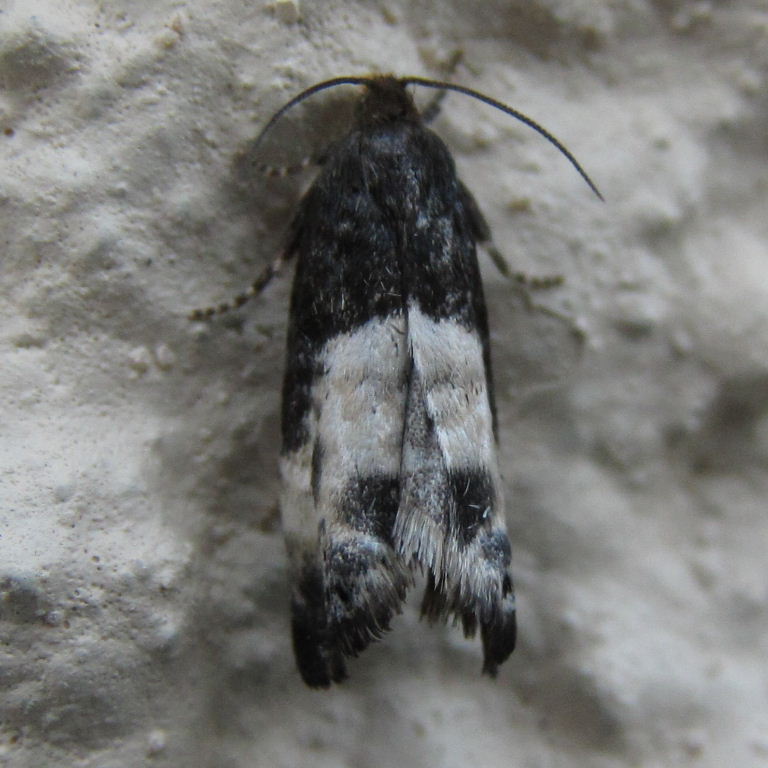
Another "bird-dropping" pattern small moth, flying in mid May. The orange snout identifying Notocelia
cynosbatella above, again. The larvae feed on roses, wild and cultivated.


Above is a Bramble Shoot moth, Epiblema/Notocelia uddmanniana,
related to the Notocelia/Epiblema cynosbatella and distinguishable by its chocolate brown patch on its lower back.
Wingspan 15-20mm; UK flight time Jun-Jul.


The moth above is also an Epiblema/Notocelia or Gypsonoma species. (Possibly Common Cloaked Tortrix,
Gypsonoma dealbana, 11–14 mm and no yellow palps.)