

Spotted/Paletail Unicornfish Naso brevirostris

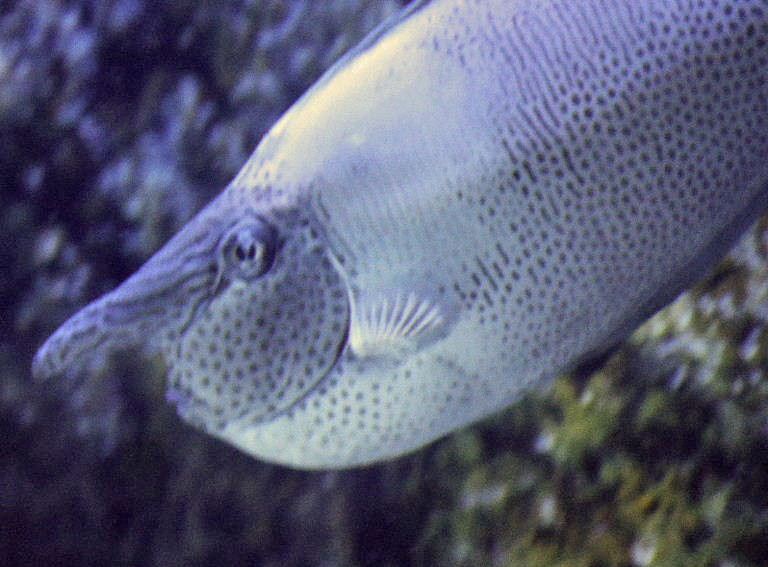
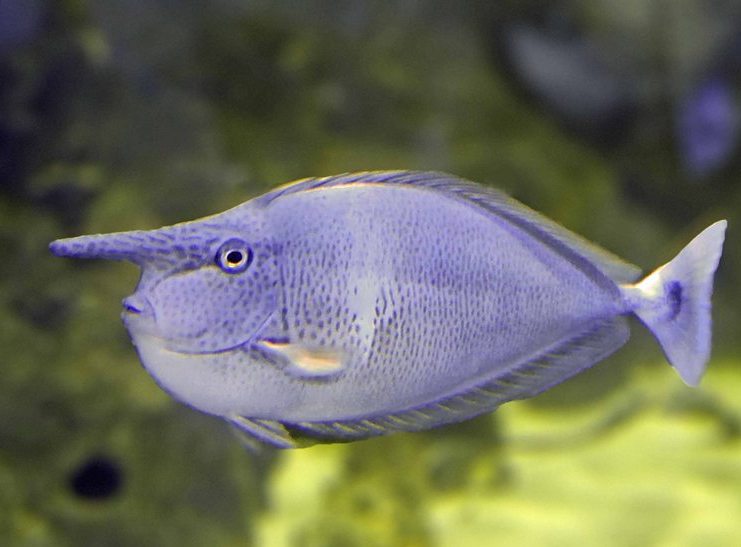
The Spotted Unicornfish is also called the Short-nosed (as is its taxonomic name) and the Paletail Unicornfish.
There are problems with all of these names. As can be seen in the first image above, it's a travesty to call this fish with its elongated
"fish finger" of a horn "short-nosed" or "brevirostris". The second image above shows the spots but they are not always visible on
mature individuals and another species, the hornless Naso maculatus, also has Spotted Unicornfish as one of its names.
Finally the Paletail refers to a tail that starts with a black spot where it joins the body and then is white (unlike the White-margined
which has a darker tail with only a border of white) but the Blue-spined has an all white tail.
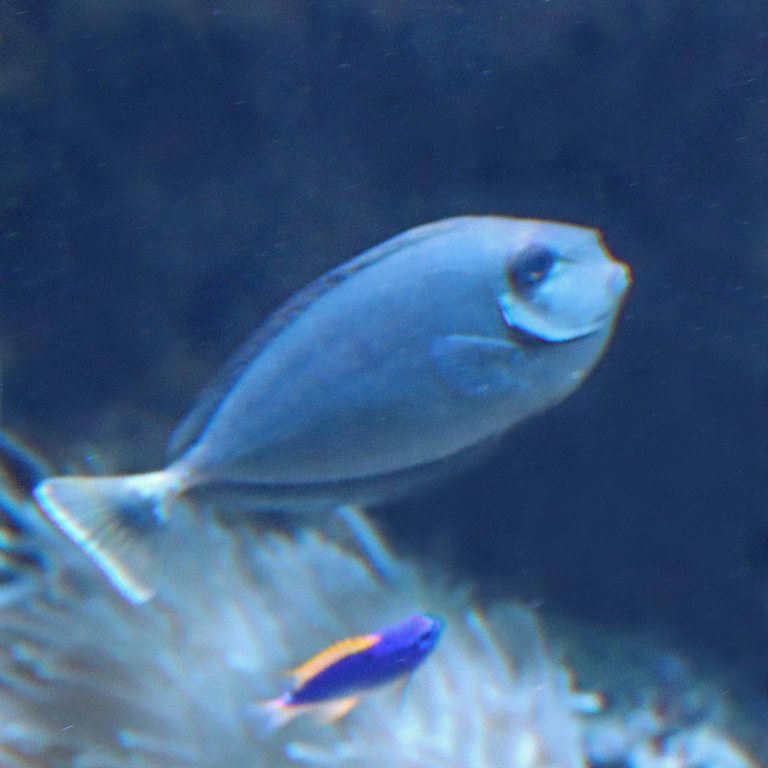
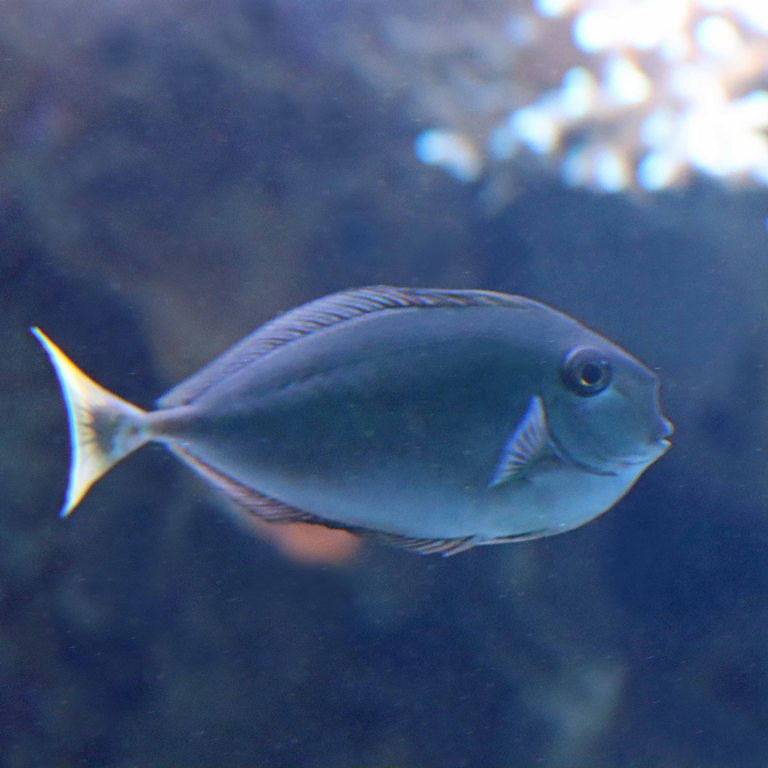
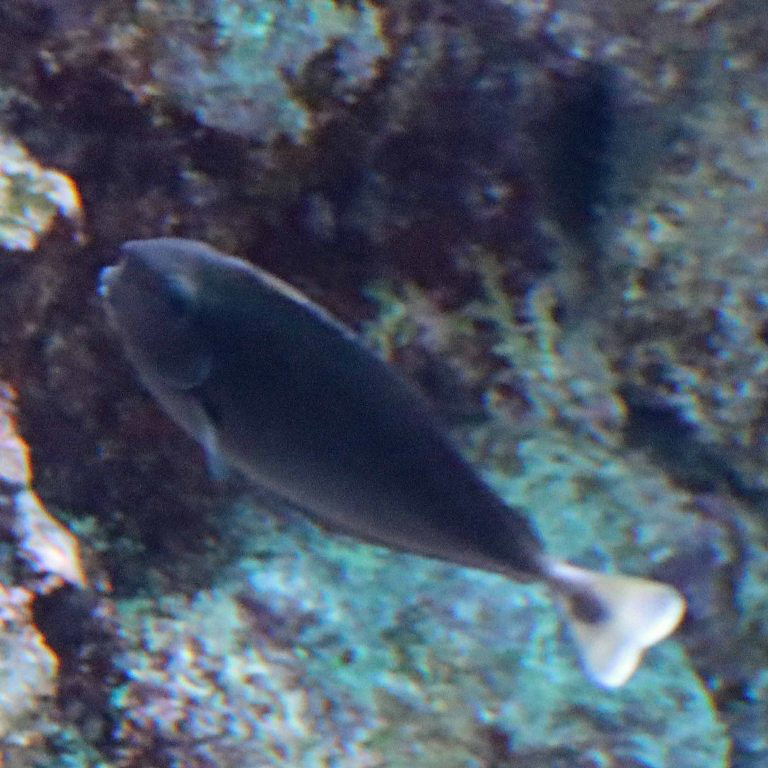
The juveniles, immediately above, are more deserving of the name Short-nosed/brevistrostris, although the Ringtail,
N. annulatus, is also called the "short-horned". It is said that, if the protrusion is taken as a horn, not a nose, then the Spotted/Paletail
is aptly described since the face from below the horn to the mouth drops vertically without a sloped "nose".
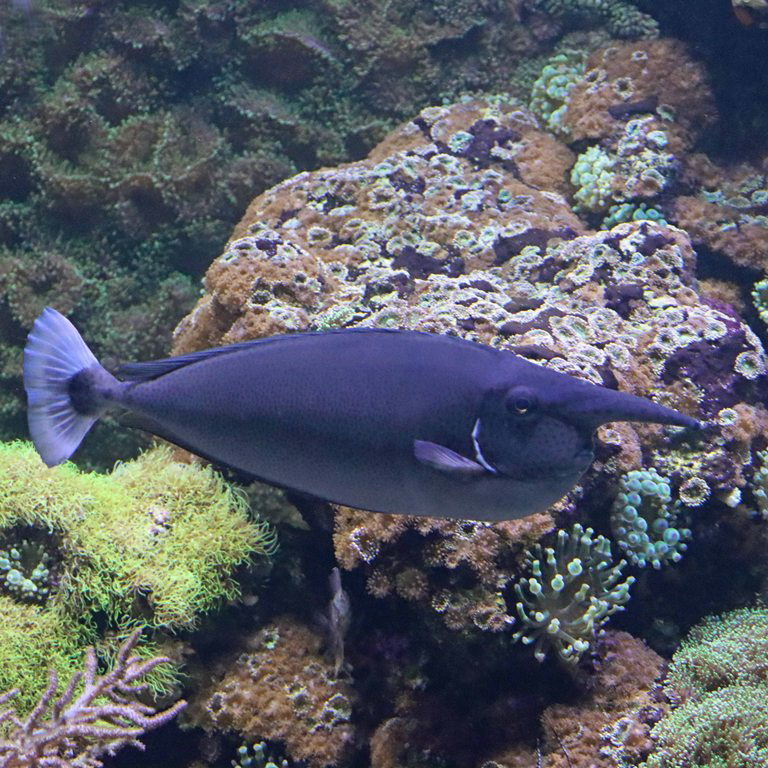
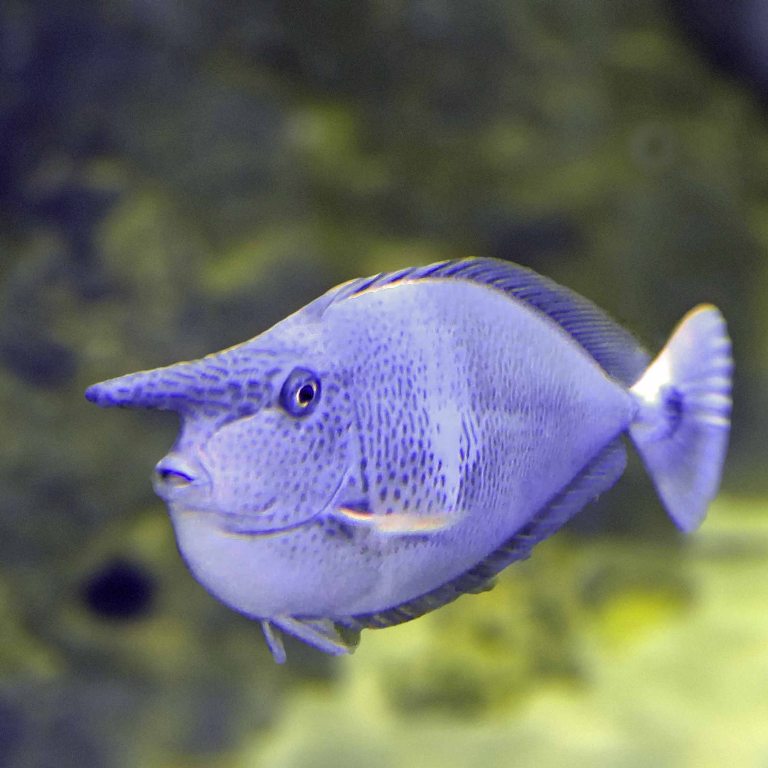

It is native to the Indian and Pacific Oceans. Its body is generally blue-grey to olive-brown with a spotted face, including
the horn, and some spots or close stripes on the flanks and often a pale saddle. It can grow to 60 cm (2 feet) long.
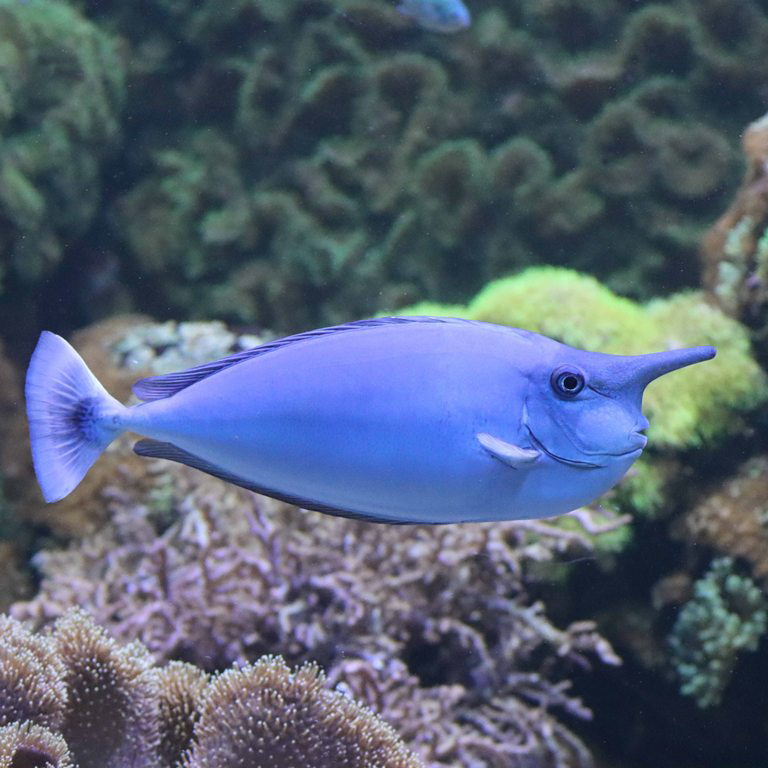


Diet is plankton in early life, mainly algae for juveniles but must revert to plankton again in later adulthood
when the horn is too long to allow grazing algae from rocks.